

Which midsize truck handles off-road trails around Cedartown, GA better — 2026 Toyota Tacoma or 2026 Honda Ridgeline?
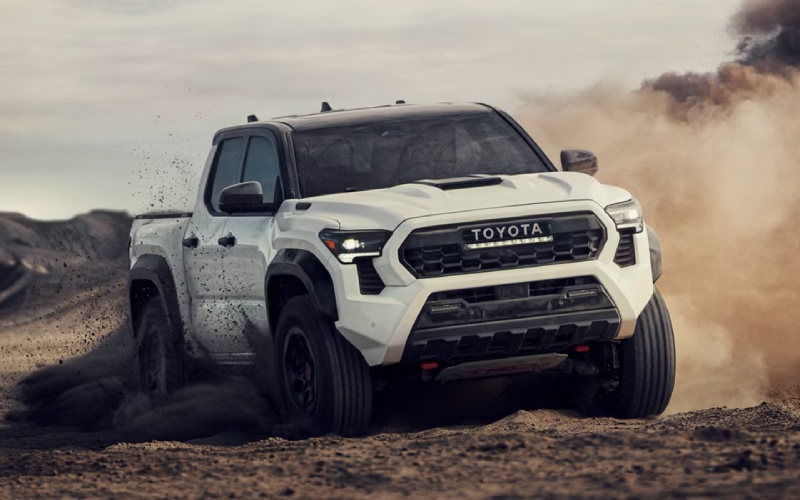
Welborn Toyota of Rome – Which midsize truck handles off-road trails around Cedartown, GA better — 2026 Toyota Tacoma or 2026 Honda Ridgeline?
Why this question matters to local drivers
Northwest Georgia offers a mix of well-maintained highways, washboard gravel, and the kind of clay-backed ruts that can turn simple errands into mini adventures. When shoppers ask which midsize truck is the better off-road partner for those conditions, the 2026 Toyota Tacoma and 2026 Honda Ridgeline often rise to the top of the list. Both are comfortable, practical, and smartly equipped. The core difference is their philosophy: Tacoma is a body-on-frame truck with serious trail hardware available from the factory, while Ridgeline uses a unibody design tuned for smooth-road composure first and foremost. Understanding those foundations makes it easier to decide which one matches your routes around Cedartown, GA.
Tacoma’s advantage starts with proven truck fundamentals and scales up fast. Available hardware includes a Stabilizer Disconnect Mechanism (SDM) for added articulation, Crawl Control (CRAWL) that automatically manages throttle and braking at very low speeds, and a next-generation Multi-Terrain Monitor with front, side, and underbody camera views. TRD Pro’s FOX® shocks and Trailhunter’s Old Man Emu® 2.5-in. forged monotube position-sensitive shocks with rear piggyback reservoirs are engineered to stay cool and composed when the trail gets choppy, and the available 2400W AC power supply turns the bed into a campsite or worksite hub. Ridgeline’s TrailSport trim counters with all-terrain tires and retuned suspension, and the i-VTM4® AWD system is confident on rain-slick pavement and light trails. It can tackle gravel roads and mild two-tracks without drama. The difference reveals itself when breakover angles tighten, ruts deepen, or a washout demands tire placement and suspension travel Tacoma was designed to deliver.
Key hardware differences that matter off-road
- Chassis philosophy: Tacoma’s body-on-frame is built for repeated flex and load; Ridgeline’s unibody focuses on ride comfort and interior integration.
- Articulation tools: Tacoma’s available SDM and rear locker help keep tires in contact with uneven surfaces; Ridgeline uses traction logic through i-VTM4® without a locker.
- Low-speed control: Tacoma’s Crawl Control (CRAWL) assists throttle and braking on steep or slippery sections; Ridgeline relies on driver modulation and standard stability aids.
- Visibility on the trail: Tacoma’s Multi-Terrain Monitor can show obstacles near the front tires; Ridgeline offers a multi-angle rearview camera but not underbody views.
- Power delivery: Tacoma’s available i-FORCE MAX hybrid adds instant electric torque for precision at crawl speeds; Ridgeline’s V-6 is smooth but not electrified.
There is also a practical confidence that comes from trail-focused design. On Tacoma TRD Pro and Trailhunter, the high-clearance front bumper and available armor components reduce the chance of bumper scrapes or approach-angle hang-ups. That is valuable when easing into a deeply crowned driveway, pivoting around a washed-out culvert, or climbing a ledge at a remote trailhead. Ridgeline’s lower, wider front fascia looks sharp and aids aerodynamics, but it is more likely to touch down in the same scenarios.
Daily driving still counts
Of course, not every mile is off pavement. Both trucks bring safety and connectivity needed for modern commuting. Toyota Safety Sense™ 3.0 and Honda Sensing® each include features such as adaptive cruise and lane keeping assistance to reduce fatigue on I-75. For infotainment, Tacoma’s available 14-in. touchscreen pairs with wireless Apple CarPlay®, while Ridgeline offers a straightforward 9-inch Display Audio setup with wireless smartphone integration as well. If your week blends Rome errands with school and practice runs and your weekends head for dirt, Tacoma’s blend of ride quality and off-road upgrades keeps life simple—no swapping tires or adding aftermarket parts just to make a trail day comfortable.
When we advise shoppers weighing trail confidence versus on-road polish, we also ask about the kinds of “off-road” these trucks will truly see. If those plans are mostly river-access gravel, fair-weather forest-service roads, and the occasional muddy shoulder, Ridgeline’s TrailSport can serve well and keep the cabin serene. If the plan includes rock shelves, off-camber climbs, and steady exposure to washouts and ruts, Tacoma’s hardware and calibration are the more natural fit.
How to decide based on your routine
- List your typical surfaces: gravel, rutted two-tracks, steep ramps, or mostly pavement.
- Rate your priority balance: off-road traction/control versus quiet-road composure.
- Consider built-in tools: SDM, Crawl Control (CRAWL), and trail cameras versus AWD logic alone.
- Plan for add-ons: factory-ready protection and suspension versus aftermarket upgrades.
From a long-term perspective, choosing trail-focused engineering up front can reduce the need for modifications later. Tacoma’s available 2400W bed power supply, Trailer Backup Guide with Straight Path Assist, and integrated towing features turn a “sometimes” off-road truck into an everyday problem-solver. Ridgeline’s dual-action tailgate and In-Bed Trunk® are clever, especially for tailgating or stowing wet gear, but they do not change the fundamentals when surfaces get lumpy.
Frequently Asked Questions:
Does Tacoma’s hybrid help off-road, or is it mainly for efficiency?
The i-FORCE MAX hybrid adds electric torque at low speeds, which smooths throttle response during careful climbs and backing maneuvers, and pairs well with Crawl Control (CRAWL) for precise wheel placement.
Will a Ridgeline TrailSport handle the forest roads I visit a few times a year?
Yes, for light trails and gravel access, TrailSport’s all-terrain tires and retuned suspension are confidence-inspiring. For frequent, technical terrain with deeper ruts or ledges, Tacoma’s articulation tools and clearance are the safer bet.
Are trail cameras really useful or just nice to have?
On narrow or uneven paths, Tacoma’s Multi-Terrain Monitor helps you avoid hidden rocks, stumps, and rut edges that can damage tires or suspension, and it reduces spotter dependence.
What if I value a quiet ride more than off-road capability?
Ridgeline’s unibody design shines for on-road composure. If your off-pavement use is minimal, you may appreciate its serenity. If you need both comfort and real trail capability, Tacoma balances those needs with available hardware.
As you narrow your decision, remember that Welborn Toyota of Rome is serving Cedartown, Calhoun, and Cartersville with experts who know these roads and trails. Bring your mix of daily routes and weekend plans, and we will map features to needs so you get the right truck the first time.
0 comment(s) so far on Which midsize truck handles off-road trails around Cedartown, GA better — 2026 Toyota Tacoma or 2026 Honda Ridgeline?